
Guide · 8 min read
Heavy Appliance Removal: What to Expect
Heavy appliances need safe lifting, clear access, and proper disposal. This guide explains how to prepare and when to call a professional hauler.
By Dan Gage · April 16, 2026
INTRODUCTION
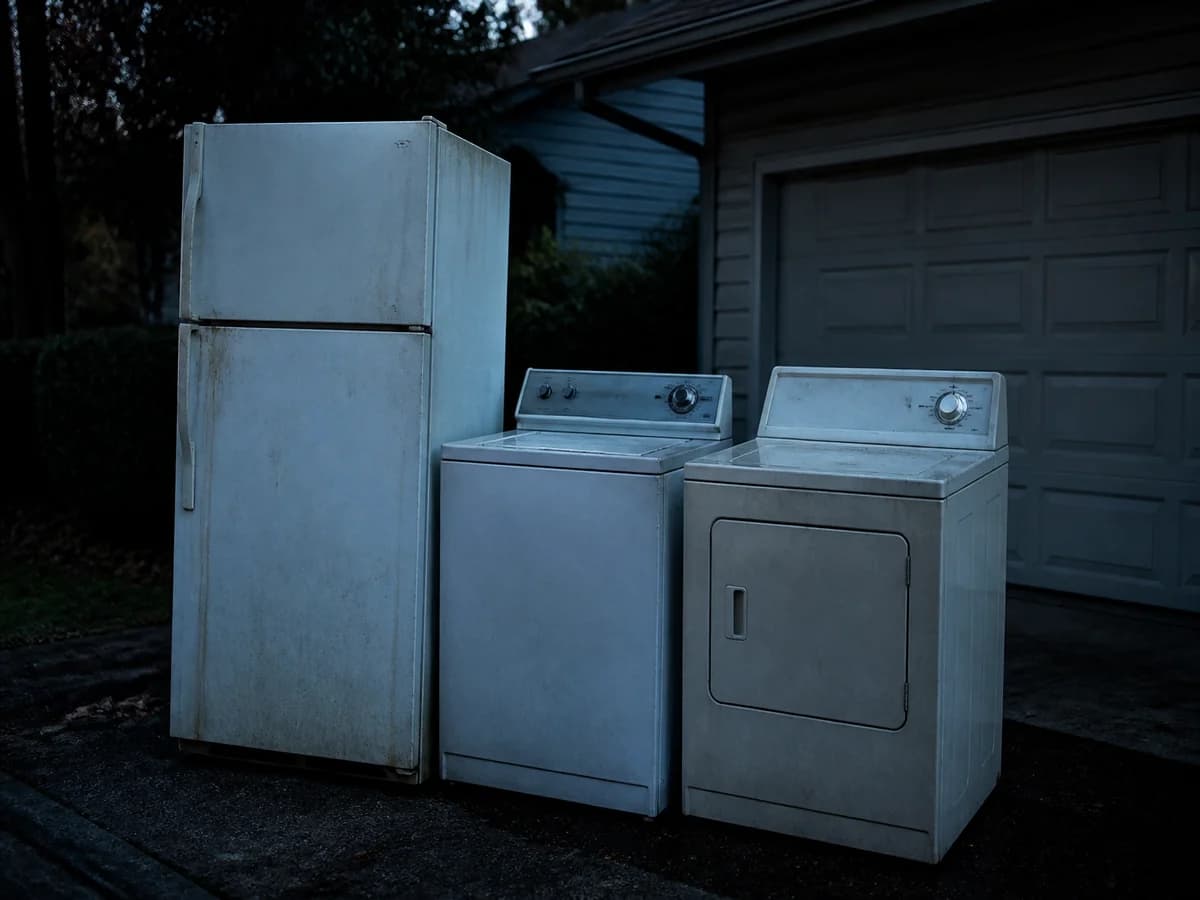
Heavy appliances have a way of becoming urgent at the worst time. A refrigerator dies before groceries arrive, a washer fails in a basement laundry room, a stove is replaced during a kitchen project, or a freezer has been sitting in the garage for years because nobody wants to move it. These items are awkward, dense, and easy to damage a home with if they are handled casually.
Junk Command removes heavy appliances across Port Huron and the Blue Water Area with a focus on safety and proper handling. The crew can haul refrigerators, freezers, washers, dryers, ranges, dishwashers, water heaters, microwaves, and similar units once they are disconnected and ready to move. If you are planning appliance removal, a little preparation makes the appointment faster and cleaner.
Detailed explanation: how heavy appliance removal works
Appliance removal begins before the crew touches the unit. We need to know what type of appliance it is, where it sits, how it is connected, and what path it must travel to reach the truck. A refrigerator in a garage with a flat driveway is straightforward. A washer in a basement, a stacked laundry pair in a closet, or a freezer wedged behind stored items needs more planning.
Most appliances should be disconnected before the appointment. Electric units should be unplugged. Washers, dishwashers, and refrigerators with water lines should have water turned off and lines disconnected if possible. Gas appliances should be disconnected by someone qualified to do so. Junk Command is a hauling company, not a plumbing or gas-fitting contractor, so safe disconnection matters before removal begins.
Once the unit is ready, the crew protects the path as much as practical, uses safe lifting techniques, and loads the appliance for proper routing. Many appliances contain recyclable metal. Some refrigeration units require responsible handling because of refrigerants and facility rules. We plan disposal around what local outlets accept and what the item requires.
Appliances are often removed during a replacement, but the timing can be tricky. Retail delivery crews sometimes haul away the old unit, and sometimes they will not if it is disconnected late, located in a basement, built into cabinetry, or not part of the delivery order. If the delivery plan changes, Junk Command can often fill the gap and remove the old unit separately.
Pricing expectations for appliances
Appliance pricing depends on the number of units, access, weight, and disposal requirements. One small microwave is not the same as a refrigerator, and a washer in a basement is not the same as a dryer sitting at the curb. A single appliance may fall near a minimum pickup, while multiple appliances or hard access can increase the price. Photos and location details help us quote accurately.
Refrigerators and freezers may involve special handling because of size, doors, food residue, and refrigerant rules. Washers can be heavier than they look because they contain drums, motors, and sometimes leftover water. Water heaters should be drained before pickup. Dishwashers and built-in microwaves may need to be fully detached before we can safely remove them.
Bundling can reduce the overall cost per item. If you are already removing a refrigerator, adding a stove, old washer, or garage clutter may be more efficient than scheduling separate visits. Many customers combine appliance removal with /garage-cleanout or remodeling debris so the truck space is used well.
There may also be a difference between an appliance that is ready to roll and one that is still built into the space. A freestanding dryer is usually simple. A dishwasher under a counter, a wall oven, or a refrigerator surrounded by tight cabinetry may need work before hauling can begin. If removal requires tools, shutoffs, or trades work beyond basic hauling, plan that step first so the pickup does not stall.
Tips to prepare appliances for pickup
Empty and clean appliances as much as possible. Remove food from refrigerators and freezers, drain washers, clear lint from dryers, and take personal items off or out of the unit. If a refrigerator or freezer has been unplugged, prop the doors safely or keep it ventilated to reduce odor. Tell us if the appliance contains spoiled food or has been exposed to pests so we can plan appropriately.
Clear the route from the appliance to the exit. Move laundry baskets, rugs, stored boxes, pet bowls, small tables, and anything else that narrows the path. In winter, salt icy steps and clear snow if the appliance must travel outside. Heavy items are safest when the crew can focus on the lift instead of stepping around clutter.
Do not try to muscle a heavy appliance alone just to save a few minutes. Many injuries happen when someone tilts a washer on basement stairs or tries to slide a refrigerator across flooring without help. If you want to help, the best help is preparation: disconnect safely, clear the path, and share accurate access details before the crew arrives.
Take a quick look at doors, trim, and flooring before the appointment. If a refrigerator door had to be removed when the unit was installed, tell us. If the laundry room floor is soft, the basement stairs are uneven, or the appliance is surrounded by stored items, mention it. These details let the crew slow down where it matters and avoid preventable damage.
When to hire professionals for appliance removal
Hire professionals when the appliance is heavy, located on stairs, connected in a tight space, or likely to damage floors and walls. Refrigerators, washers, freezers, and water heaters are common causes of strained backs and scratched property. A trained hauling crew has the equipment, experience, and teamwork to move them more safely than one or two unprepared helpers.
Professional hauling is also the better choice when disposal is unclear. Appliances are not always accepted through normal trash channels, and some require specific recycling or handling. Loading one into a pickup and hoping the first facility takes it can waste half a day. Junk Command handles the hauling and routes the appliance according to local disposal options.
If the appliance is part of a larger project, do not treat it as a separate headache. Kitchen updates, laundry room renovations, rental turnovers, and estate cleanouts often include appliances plus furniture, cabinets, boxes, and debris. One coordinated removal plan is usually faster and cleaner than piecing together several small trips.
FREQUENTLY ASKED QUESTIONS
RELATED GUIDES
Explore service areas, services, pricing, or return to the homepage.